
For kitchens
A dish should not leave when the chef does.
Record your chef’s house method once. Keep the unknowns as questions — not guesses — so nothing important gets lost.
People change. Great food shouldn’t.
The recipe was never the problem. The parts nobody wrote down are.
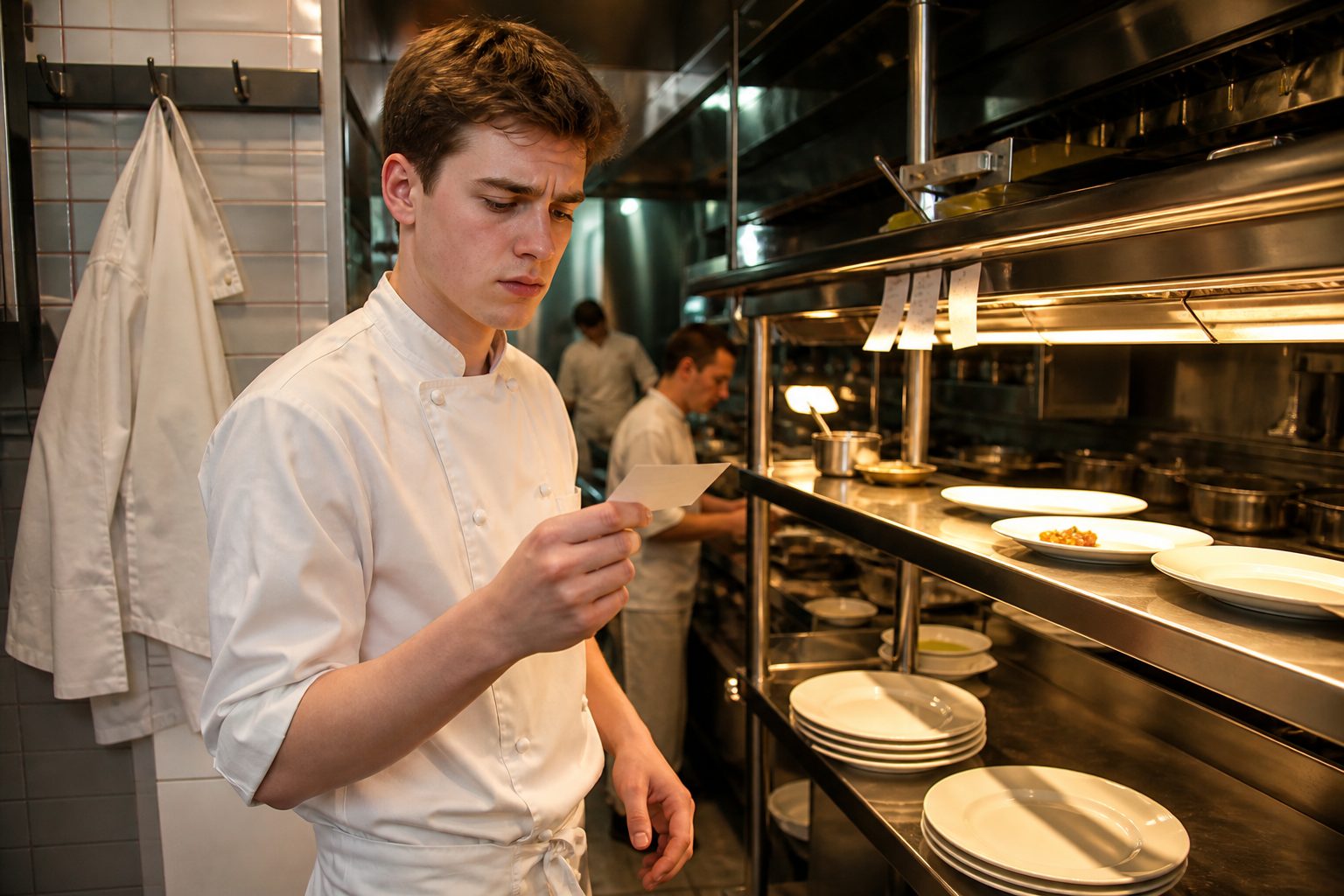
Consistency is lost the moment the person who owns the dish is not in the building.
The chef leaves
Years of know-how walk out. The sheet has ingredients — not the judgement.
The chef is off
Standards slip without the person who owns the dish. It goes out. It is not the same.
The second site opens
A copied document does not carry what was never written at the first pass.
The new starter
They are keen — but the crucial details drift with whoever is on shift.
Turn know-how into action
Station cards that teach your house method.
Record the chef once. Give the next shift a card they can cook from — without inventing the bits the chef never fixed.
- Step-by-step, in the chef’s own words.
- Colour, sound and timing cues — never a guessed taste.
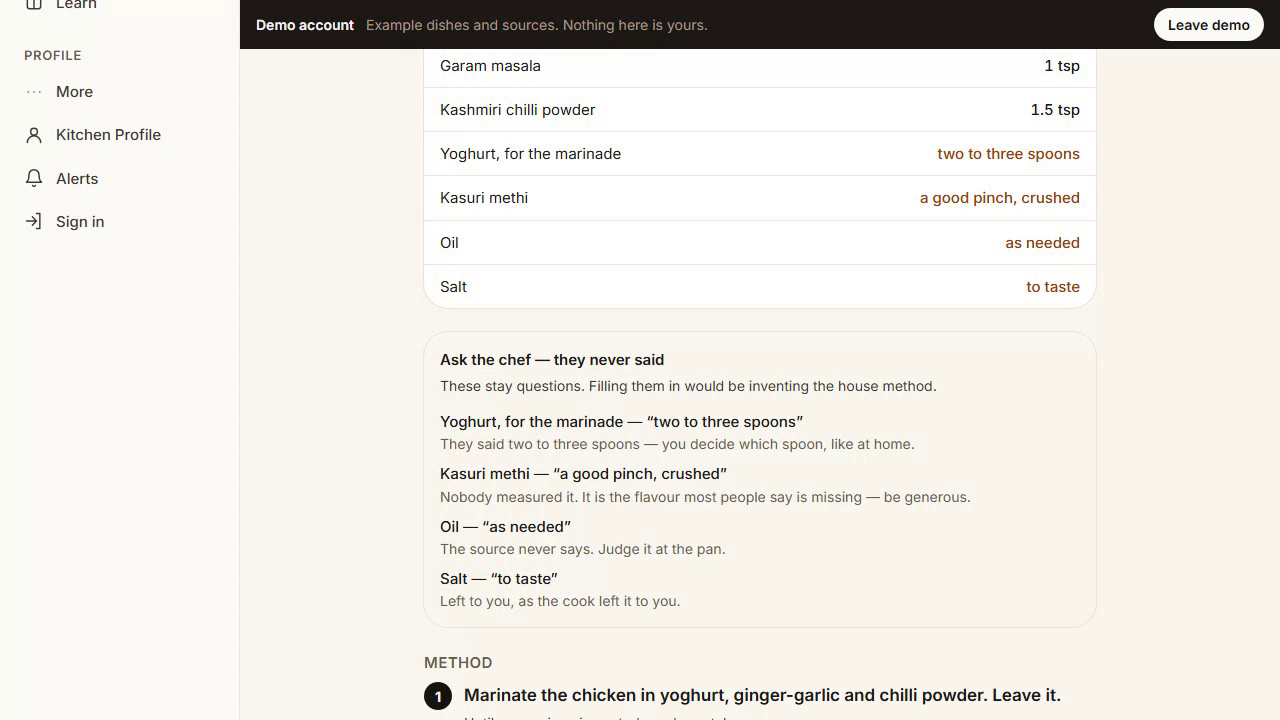
- Open questions stay visible. Never filled in.
Training the next shift
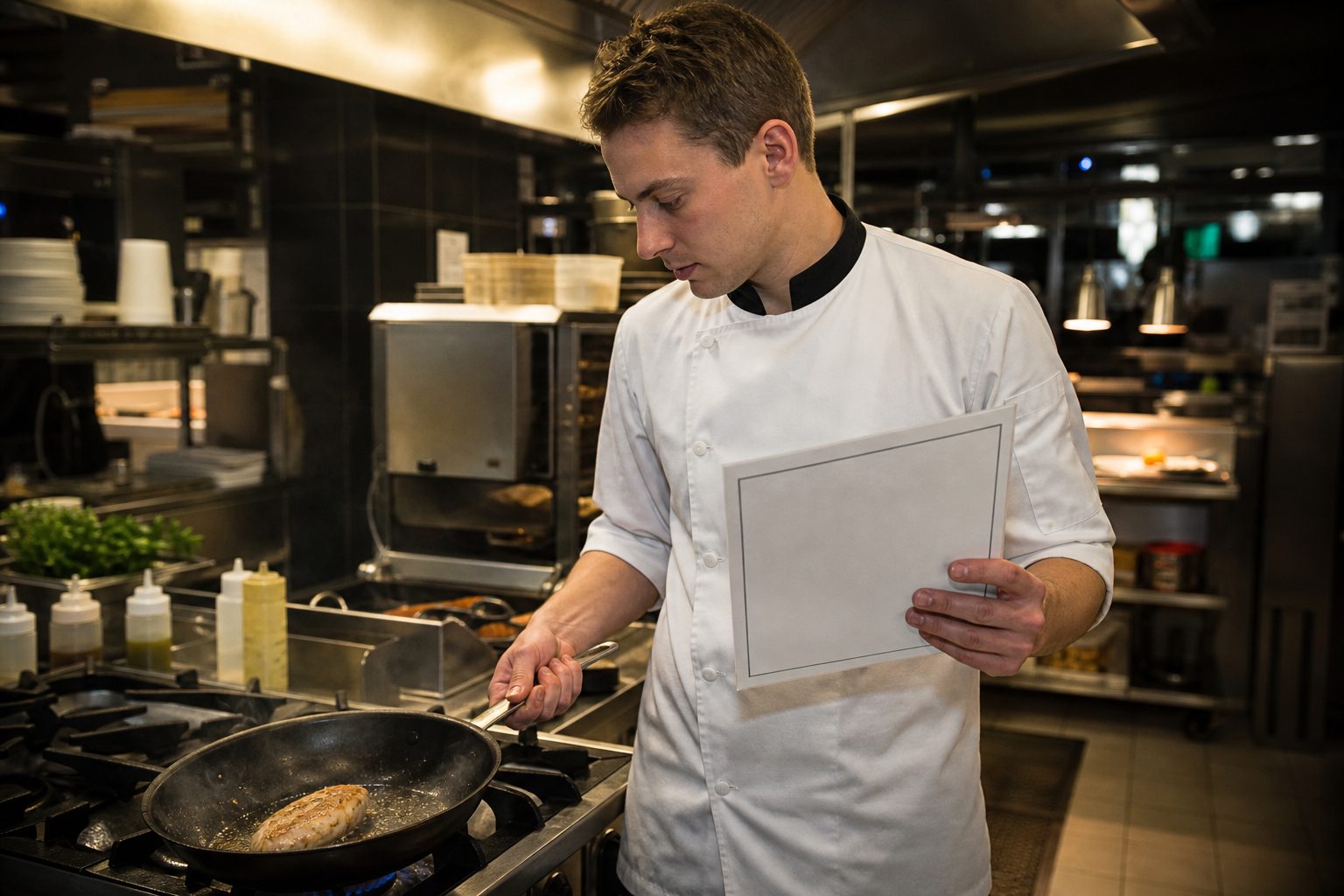
The chef is off. The dish still has to go out.
How the engine we already have would put a house method in a trainee’s hands.
Beat 1 of 5
When the chef is not there
Sick, notice served, or already gone — the dish still has to go out. The spec sheet has ingredients. The judgement never got written down.
Illustration on the demo dish — not a live kitchen, and not a product you can buy today.
Transcript
- When the chef is not there. Sick, notice served, or already gone — the dish still has to go out. The spec sheet has ingredients. The judgement never got written down.
- Record the house method once. The person who owns the dish, at the pass, while they are still standing there. Not a YouTube import. Their words, their timings, the bits nobody wrote down marked as questions.
- A station card for the next shift. A trainee follows how this kitchen does the dish. Amounts the chef never fixed stay questions — never filled in for them.
- Someone else can cook it tonight. The card is in their hands, not a video on a phone. One step at a time, with the cue the chef actually gave.
- One kitchen, one dish. That is the whole ask for a first pilot. There is no kitchens product yet — this is the shape we would build first.
A powerful foundation, ready for kitchens.
The engine is built and pointed at home cooking today. These are real capabilities — not a kitchens dashboard.
Reads a demonstration
Video, a recording at the pass, or a page — steps linked back to the source.
Finds what’s missing
Amounts nobody stated arrive as questions for the chef — never invented figures.
Structured output
Ingredients, order and cues as a cookable guide — and a printable station shape.
Scales without inventing
Ingredients scale by arithmetic. Times and heat stay as stated.
An honest note
There is no kitchens product today — no dashboard, no seats, no price. This page is here to find the first kitchen to build it with.
Talk to us
One kitchen, one dish, one chef who is thinking about leaving.
That is the whole ask for a first pilot. If it is useful you will know inside a week.
Or write to hello@recipemirror.com.